


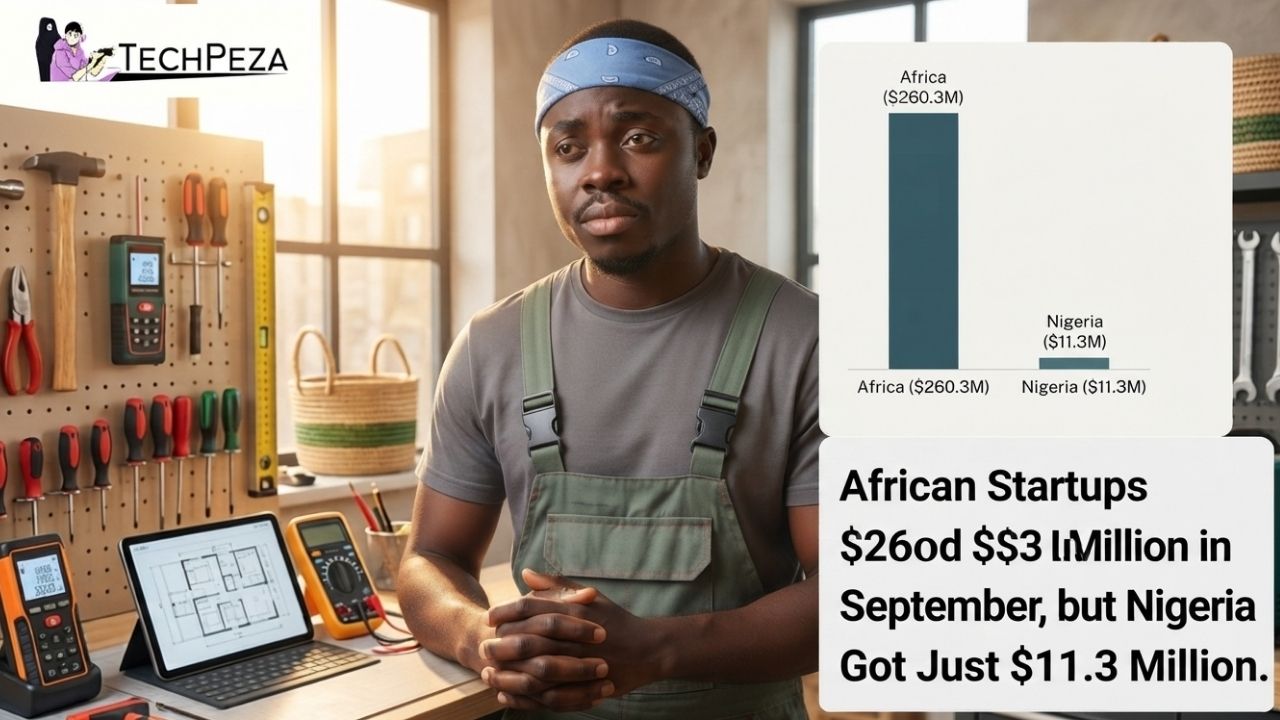
African startups raised $260.3 million across 54 disclosed deals in September 2026, according to monthly data compiled by Nairametrics’ research team. That’s well down on August but almost double September last year.
The headline figure hides two striking trends. First, the money was heavily concentrated: the ten largest deals took about 85% of the total. Second, Nigeria, long one of Africa’s “Big Four” startup markets, attracted just $11.3 million, about 4% of the month’s funding.
The numbers at a glance
| Measure | September 2026 |
|---|---|
| Total raised | $260.3 million |
| Disclosed deals | 54 |
| Top 10 deals | $222.6 million (about 85.5% of the total) |
| Change vs August 2026 | Down about 40% (from $435.2 million) |
| Change vs September 2025 | Up about 88% (from $138.3 million) |
| Debt funding | $112.1 million across 12 deals, the largest category |
| Nigeria | $11.3 million across nine deals (about 4.3%) |
The biggest deals
| Company | Country | Amount | Type | Sector |
|---|---|---|---|---|
| Odyssey Energy Solutions | Pan-African | $74m | $27m equity + $47m debt | Energy |
| Paymob | Egypt | $35m | Pre-Series C | Fintech |
| Arc Ride | Kenya | $33.3m | Not specified | Transport |
| Spiro | Kenya | $18m | Debt (Africa Go Green Fund) | E-mobility |
| Synapse Analytics | Egypt | $13m | Series A | Deeptech |
| Nawy | Egypt | $12.3m | Fund issuance | Property |
| Zeal | Egypt | $10m | Venture round | Fintech |
| SunCulture | Kenya | $10m | Securitisation | Energy |
Source: Nairametrics’ monthly tracker. Odyssey and Paymob figures confirmed from the companies’ announcements.
Two of the largest deals show where investors’ money is going:
- Odyssey Energy Solutions announced $74 million on 1 September: $27 million in equity and $47 million in debt. Its platform connects more than 6,000 solar and energy installers with lenders and equipment suppliers, and it plans to expand financing that helps installers buy equipment for larger projects.
- Paymob, the Egyptian payments company, raised $35 million in a pre-Series C round co-led by Mubadala and the EBRD, to expand across the Middle East and North Africa and build products for small merchants.
Where the money went
By sector
- Energy and water: $94.2 million (about 36%), led by Odyssey and SunCulture
- Fintech: $67 million (about 26%) across 17 deals, still the most active sector by deal count
- Logistics and transport: $58.5 million (about 22%), boosted by Arc Ride and Spiro, both electric-mobility companies
By country
- Egypt: $74.6 million (nine deals), the top country
- Kenya: $54.2 million (nine deals)
- Nigeria: $11.3 million (nine deals)
- South Africa and Uganda: about $8.4 million each
- Ghana: $6.9 million
Debt is rising
Debt was the single biggest funding type, at about 43% of the total. That fits a wider trend: energy and e-mobility companies, which have physical assets such as solar systems and electric bikes, increasingly borrow against those assets instead of only selling equity.
Why investors keep backing energy and e-mobility
Energy and transport together took almost 60% of September’s money. There are good reasons:
- Real demand: unreliable grids and expensive fuel push households and businesses towards solar, batteries and electric bikes.
- Assets to lend against: solar systems and e-bikes can secure loans, which is why so much of the funding was debt.
- Climate funds: development finance institutions and climate-focused investors have money earmarked for clean energy in Africa.
- Predictable revenue: pay-as-you-go solar and battery-swap subscriptions bring in steady weekly or monthly payments.
How to read monthly funding numbers
Monthly figures are useful but noisy:
- They count disclosed deals only. Many smaller rounds are never announced.
- One large deal can swing a country’s total, so a single month says little on its own.
- Trackers differ. Nairametrics, Africa: The Big Deal and Briter often publish different totals because they count debt, grants and undisclosed rounds differently.
- Debt and equity aren’t the same thing. A $47 million loan facility isn’t equivalent to $47 million of venture equity.
That’s why trends over several months matter more than any single figure.
Why Nigeria lagged
Nigeria had as many deals as Egypt and Kenya (nine each), but they were much smaller. The only Nigeria-linked deal in the top ten was a $5 million mezzanine debt facility from the All On impact fund to PowerGen’s Nigerian business for mini-grid projects.
Several factors have weighed on Nigerian fundraising:
- Currency pressure: a weaker naira makes local revenue worth less in dollars, which matters to foreign investors.
- Tougher investors: Nigerian startups seeking capital now face higher bars on profitability and governance, as several local investors have told the press this month.
- Big exits and shutdowns: high-profile departures, including Uber and Moove in the past six weeks, have added to caution about some consumer-facing models.
One month’s data can swing widely, especially when a single large deal lands in one country. But Nigeria’s small share is a signal worth watching.
What this means for Nigerians
For founders
- Energy, e-mobility and fintech remain fundable, especially businesses with real assets or clear revenue.
- Consider debt and blended finance for asset-heavy businesses. Several of September’s biggest deals were debt, not equity.
- Show unit economics. With investors more selective, a clear path to profitability matters more than fast growth alone.
For job seekers
Funding usually turns into hiring. With less money flowing into Nigerian startups this month, tech job seekers may find more opportunities at Egyptian, Kenyan and pan-African companies hiring remotely, as well as at well-funded local fintechs.
For consumers
More investment in solar financing and electric mobility across Africa should, over time, mean more products such as pay-as-you-go solar, battery-swap networks and e-bike financing. Several of those companies already operate in Nigeria or plan to.
What about Ghana and Kenya?
Kenya had a strong month, taking about $54 million, much of it for clean energy and electric mobility through Arc Ride, Spiro and SunCulture. Ghana raised about $6.9 million. Kenya’s lead in climate-related funding continues, while Nigeria and Ghana are trying to catch up in that space.
What to watch next
- October’s numbers: whether Nigeria’s share recovers.
- More debt deals: whether lenders keep backing energy and e-mobility companies.
- Nigerian fintech rounds: fintech is still Nigeria’s strongest sector, and a single large round could change the picture quickly.
Sources
- September 2026 funding data: Nairametrics
- Paymob’s $35 million round: Mubadala announcement; Fintech Futures
- Odyssey Energy Solutions’ $74 million: Latitude Media; Mercom
- Investors raising the bar for Nigerian startups: Nairametrics
About the author: Steve Oke. is the editor of TechPeza, where he covers AI tools, electric vehicles, home power, fintech and smartphones for African readers.
This is news, not financial advice.

